Hair Shedding and Scalp Aging: What’s Normal and What Helps
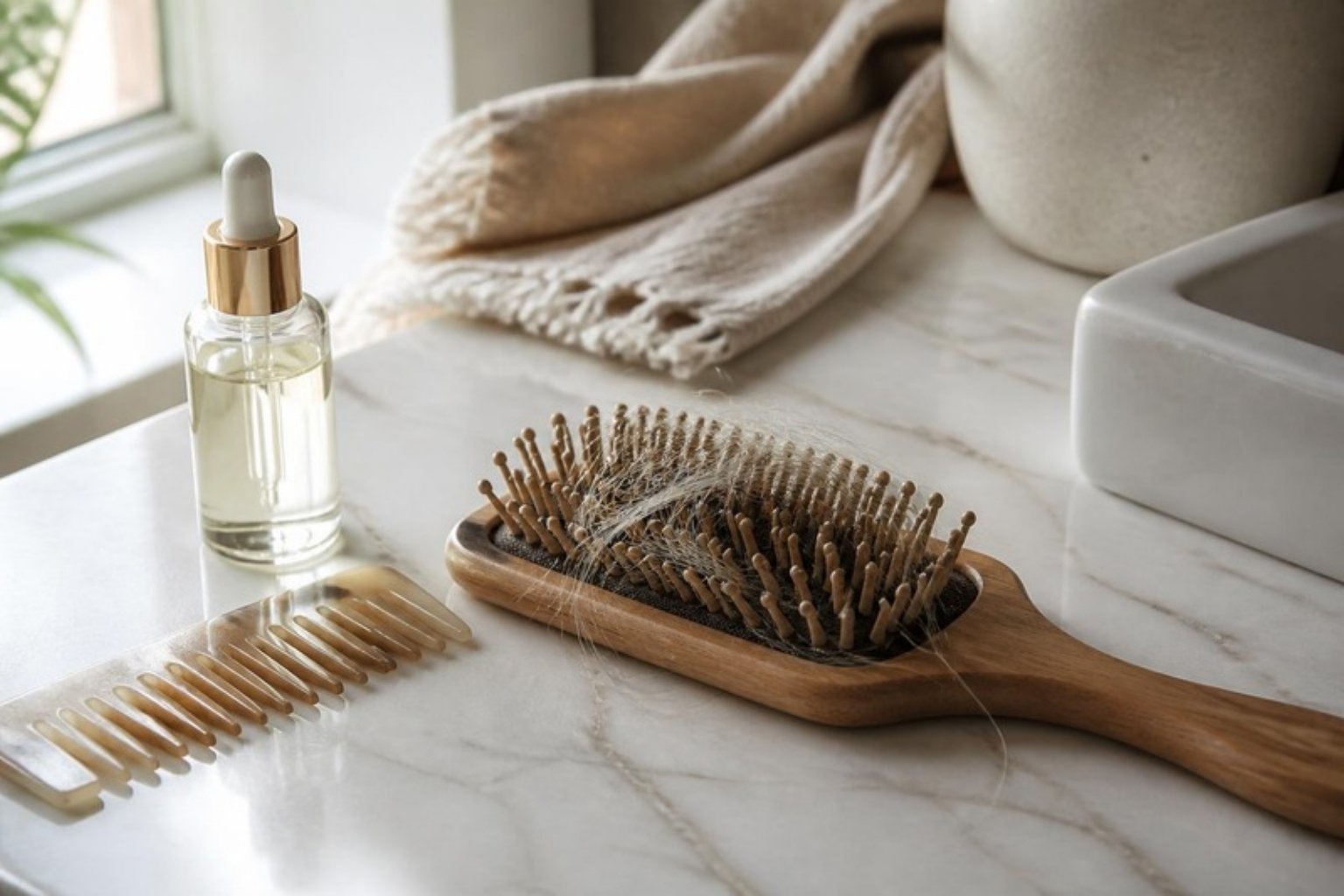
If you've ever looked at your hairbrush or the shower drain and thought, "Is this too much?", you're not alone. It's one of the questions I hear most in my chair. The short answer: some shedding every day is completely normal, and your scalp changes as you get older, just like your skin does. Here's what's going on and what you can do about it.
How much shedding is normal?
Most people lose somewhere around 50 to 100 hairs a day. That sounds like a lot, but you have roughly 100,000 hairs on your head, and new ones are always growing in to replace the old.
Every hair goes through a cycle. It grows for a few years, rests for a few months, then falls out so a new hair can take its place. You may notice more hair on wash day or after you brush, simply because those loose hairs collect and come out all at once.
Why you might suddenly shed more
A sudden increase in shedding usually has a trigger. Common ones include:
A stressful event, illness or surgery
Having a baby
Big changes in diet or quick weight loss
Hormone changes, including menopause
Starting or stopping certain medications
Here's the tricky part: this kind of shedding often shows up two to three months after the event, so it's easy to miss the connection. The good news is that it usually settles down on its own once your body recovers.
What "scalp aging" really means
Your scalp is skin, and it ages the same way the skin on your face does. Over time:
Hair can grow in finer. Some follicles make thinner, shorter hairs than they used to.
Your scalp makes less oil. That can leave hair drier and more fragile, and the scalp itself can feel tight or flaky.
Hormones shift. For many women, the years around menopause bring thinner hair, especially at the part and crown.
Sun adds up. Years of sun on your part line can leave the scalp drier and more sensitive.
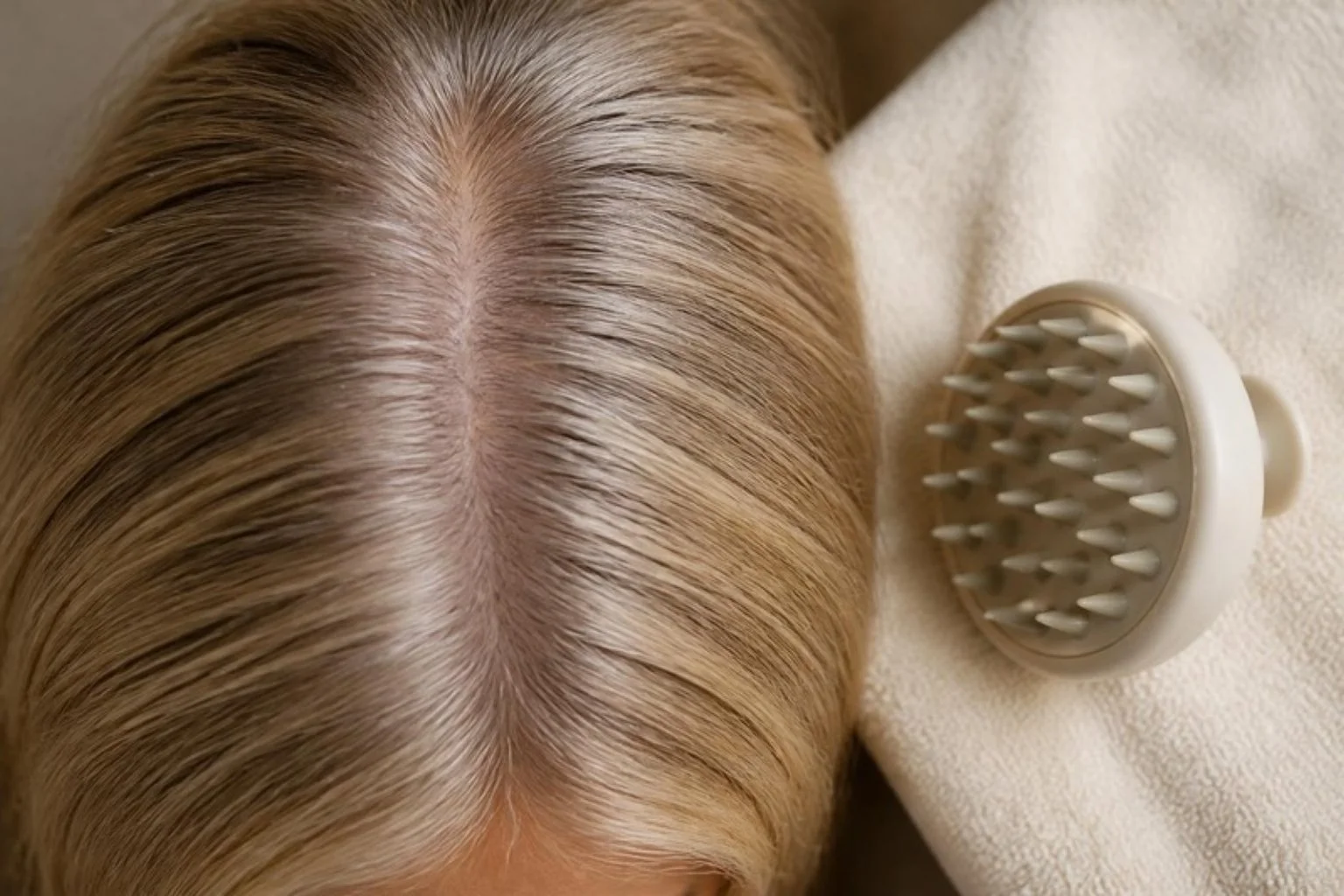
You might notice your part looks a little wider, your ponytail feels smaller, or your hair just doesn't hold a style like it used to. Gray hairs often show up around the same time. Gray hair is a separate change (your hair is making less pigment), but gray strands can feel coarser and drier, so they benefit from the same gentle care.
Simple ways to care for an aging scalp
You can't stop time, but you can give your hair the best chance to grow strong:
Be gentle. Use a wide-tooth comb on wet hair, and skip tight ponytails and buns that pull at the root.
Turn down the heat. Use a heat protectant and a lower setting on your dryer and irons.
Treat your scalp like skin. A gentle shampoo, a light massage while you wash, and a hat when you're out in the sun all help.
Eat well. Hair is made of protein, so make sure you're getting enough protein, iron and overall nutrition.
Get regular trims. Trimming won't make hair grow faster, but it keeps thin, split ends from making your hair look sparser than it is.
When to see a doctor
If your shedding is sudden or heavy, you're seeing bald patches, or your scalp is itchy, red or sore, please see a dermatologist or your doctor. Thinning can be linked to things like thyroid issues or low iron, and a doctor can check for those. The sooner you know what's going on, the more options you have.
Feeling thin on top? Let's talk
Fine or thinning hair doesn't mean you have to give up the look you love. A cut with the right shape can add a lot of fullness on its own, and for some clients, carefully placed extensions can add volume and length. Not every method is right for every scalp. If your hair is very fine or still shedding a lot, we'll go slowly, pick the lightest option, or wait until things settle. That's always part of the conversation.
If you're in Boise, Meridian, Eagle, Garden City or Nampa and your hair just doesn't feel like yours anymore, book a consultation. We'll look at your hair and scalp together and come up with a plan that fits you.